One-Pocket Rules: The Complete Guide
Each player defends a single pocket and the first to eight balls takes the rack — the official rules behind pool's purest thinking game.
One-pocket is the chess match of pool: each player owns exactly one of the two corner pockets at the foot of the table, and the first to score eight balls in that pocket wins the rack. There are no ball groups, no rotation order — every ball on the table belongs to whoever can legally put it in their hole. This guide covers the official WPA rules, then why the game has a reputation no other discipline touches.
What is the object of the game?
Fifteen object balls and a cue ball, but only two pockets matter — the foot pockets, the two corners at the racking end of the table. Each player is assigned one of them. Every ball legally pocketed in your pocket is worth one point, and the first player to reach eight points wins the rack. Matches run to an agreed number of racks.
Because only two pockets count, the four remaining pockets — the sides and the head corners — are dead zones: anything that drops in them comes back up on the spot. That single fact is what turns one-pocket into a game of position and patience rather than run-outs.
How do the rack and the break work?
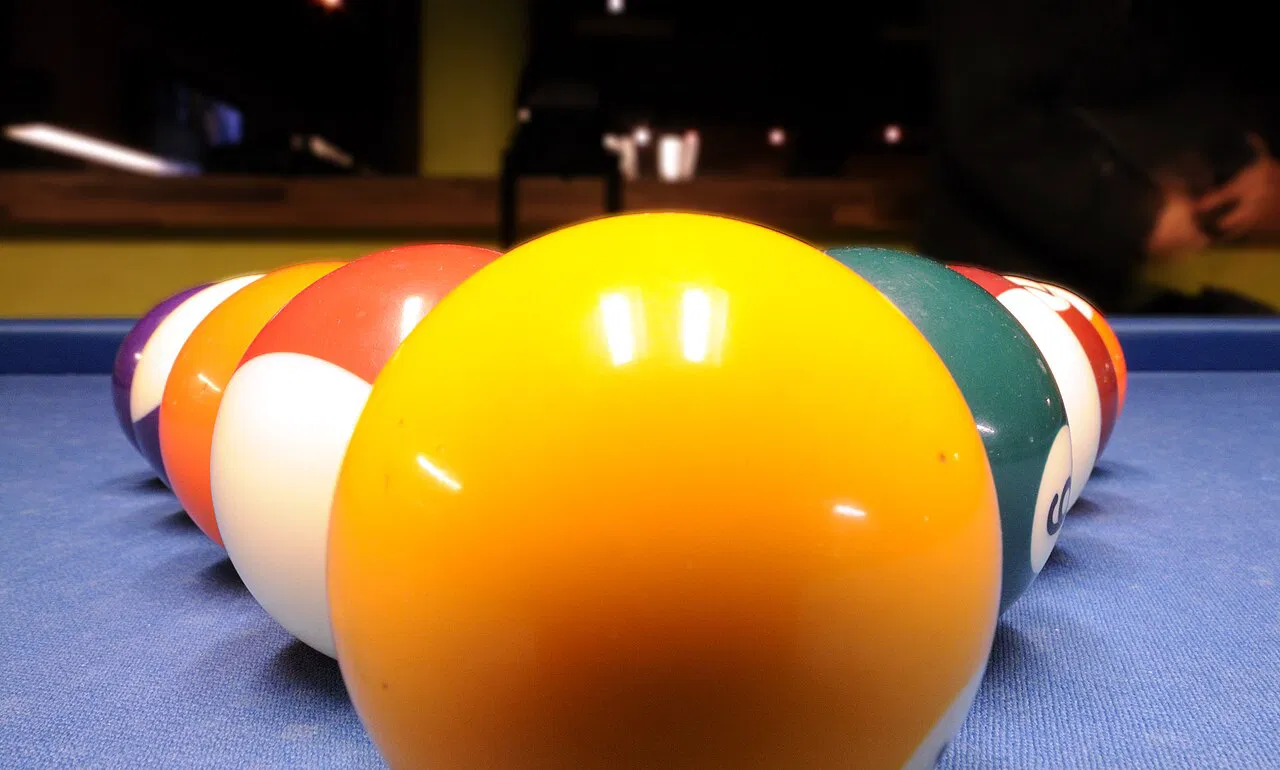
- Fifteen balls go in a standard triangle with the apex ball on the foot spot, racked as tight as possible and placed without any intentional pattern. No rack template is used.
- Players lag, and the lag winner chooses who breaks the first rack.
- Before breaking, the breaker chooses a pocket — the opponent automatically gets the other foot pocket. If the breaker doesn't say, they are assigned the foot pocket opposite the side where the cue ball is placed.
- The cue ball starts in hand behind the head string, and there are no special requirements on the break — no called ball, no minimum rails. A soft, defensive break is the standard play.
How does scoring work?
- +1 point for each ball legally pocketed in your foot pocket.
- A ball pocketed in your opponent's pocket always counts for them — even on your legal shot. Drop one in their hole by accident and you have just handed them a point.
- On a foul shot, balls pocketed in the opponent's pocket still count for the opponent — they are not spotted back, unless the only foul was that the cue ball was also pocketed.
- Balls pocketed in a side or head pocket, on a foul, or driven off the table are spotted and never count.
One-pocket has a scoring quirk all its own: the owed ball. The rules recommend using pocketed balls as physical score markers. When you foul, you forfeit one point — which means one of your scored balls is spotted back onto the table. If you haven't scored any balls yet, a marker records that you owe a ball, and the next balls you score are spotted to pay off the debt before they count.
When are balls spotted?
Spotting usually waits until the end of the shooter's turn. The exception: if a player clears the entire table without reaching eight points — possible because balls that dropped in neutral pockets don't count — everything owed is spotted immediately and the same player keeps shooting. If a ball that should have been spotted is only noticed later, it normally goes up once each player has had one full turn after the discovery, or immediately if both players agree.
What counts as a foul?
A standard foul costs one point — paid by spotting one of your scored balls, or recorded as an owed ball — and the turn passes. The cue ball generally stays where it lies. Standard fouls include:
- Cue ball scratched or driven off the table — the incoming player gets ball in hand behind the head string
- No rail after contact
- No foot on the floor
- An object ball driven off the table
- Touched ball, double hit or frozen-ball violations, push shot
- Shooting while balls are still moving
- Bad cue ball placement
- Bad play from behind the head string — for this one, the incoming player also gets ball in hand behind the head string
- Playing out of turn, or slow play
Two penalties go further. Three consecutive fouls lose the rack outright. Unsportsmanlike conduct draws whatever penalty the referee judges the offense deserves.
What happens on a stalemate — or a double win?
If the referee calls a stalemate, all fifteen balls are re-racked and the players lag again — but the score doesn't fully reset: markers for owed balls carry over, and positive partial scores from the abandoned rack are added to the new rack. And in the rare case where one shot pockets both players' winning balls — only possible under a score handicap or a stalemate re-rack — the shooter takes the rack.
Why is one-pocket called pool's chess?
Strip the game to two meaningful pockets and everything changes. Defense isn't a fallback, it's the foundation: you leave balls near your pocket for later, freeze the cue ball where nothing is available, and grind down your opponent's options one shot at a time. A single rack can last longer than a whole set of 9-ball, and a player trailing 7–0 is never out of it.
That depth is why one-pocket has been the money game of choice for generations of road players — and a signature division at the Derby City Classic since the event began. The WPA only added it to the official Rules of Play in 2025, under a new chapter for classic disciplines, giving the game a single authoritative rulebook for the first time.
Common questions
If a ball drops in my opponent's pocket on my shot, who gets the point?
They do. Any ball legally pocketed in a foot pocket scores for that pocket's owner, no matter who shot it. On a foul shot it still counts for them — unless the only foul was pocketing the cue ball.
Do balls in the side or head pockets count?
Never. Balls pocketed in the four neutral pockets are spotted back on the table and score for nobody.
What does it mean to "owe" a ball?
When you foul with no scored ball to spot as the one-point penalty, a marker records the debt. The next balls you score are spotted to pay it off before they can count toward your eight.
Is there a required break, like in 8-ball or 9-ball?
No. There are no special requirements on the break shot — the cue ball simply starts in hand behind the head string, and the breaker picks their pocket first.
What happens if you scratch?
Standard foul: you lose a point, and your opponent gets ball in hand behind the head string — not anywhere on the table.
What happens on a stalemate?
All fifteen balls are re-racked and players lag for the next shot. Owed-ball markers are preserved and partial scores carry over to the new rack.
This guide follows the WPA Rules of Play (§12 One-Pocket). Casual and house games often differ — always check the rules in force where you play. Cover photo: "Eight Ball by Pool Table Corner Pocket" by Stuart Kerr, CC BY 2.0, via Wikimedia Commons.