Bank Pool Rules: The Complete Guide
Every ball must come off a cushion to count — the official WPA rules of bank pool, pool's purest test of the bank shot, explained.
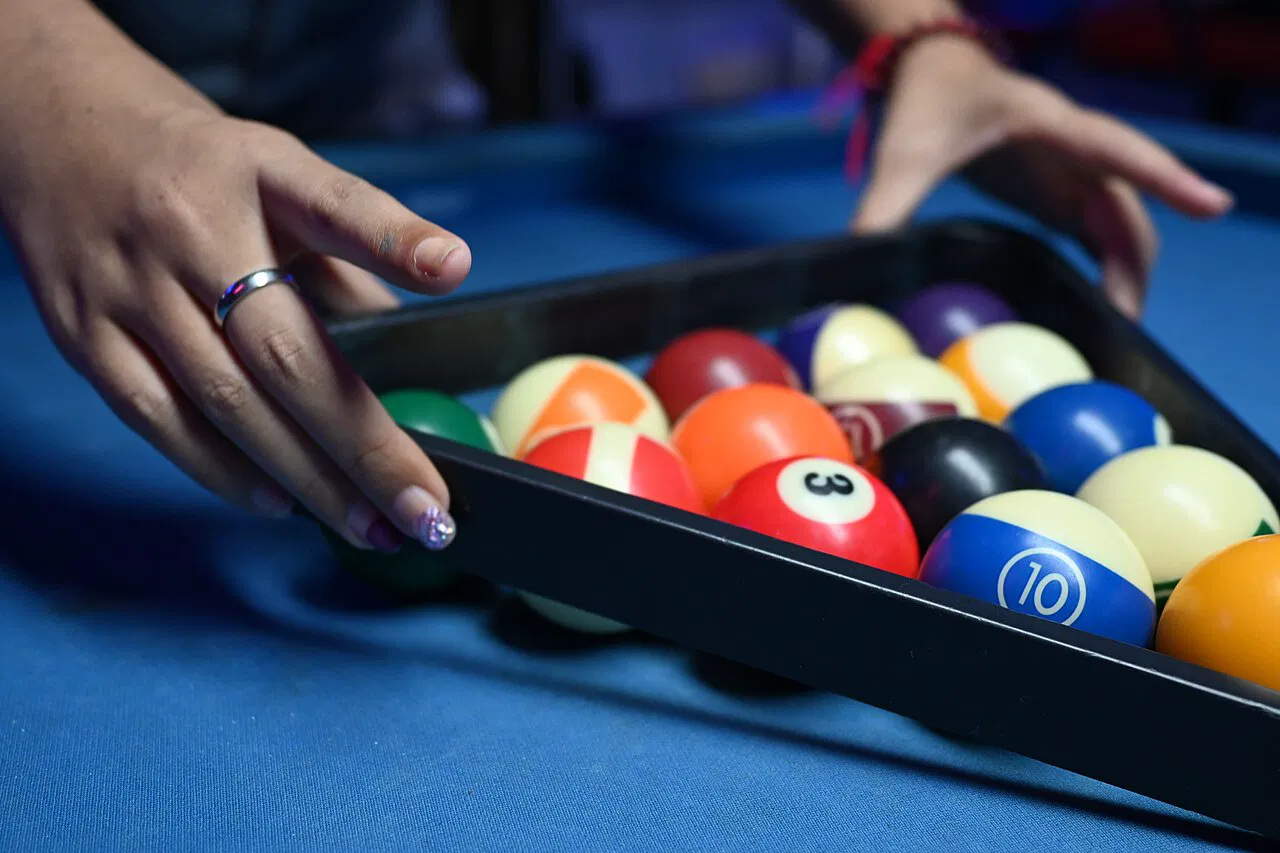
Every point has to come off a cushion — the official rules of bank pool, the game that turns the bank shot from a bailout into the whole job.
Bank pool is pool reduced to a single skill: the bank shot. Nine or fifteen object balls on the table, but nothing counts unless the object ball touches at least one rail on its way into the called pocket. Straight-in shots, combinations and caroms score nothing — those balls come back up. This guide covers the official WPA rules, and why a game with no ball groups and no rotation still produces some of the hardest decisions in pool.
What is the object of the game?
Bank pool is played with a cue ball and either nine or fifteen object balls. Every point must be earned with a valid bank shot: the called ball contacts one or more cushions before dropping in the called pocket.
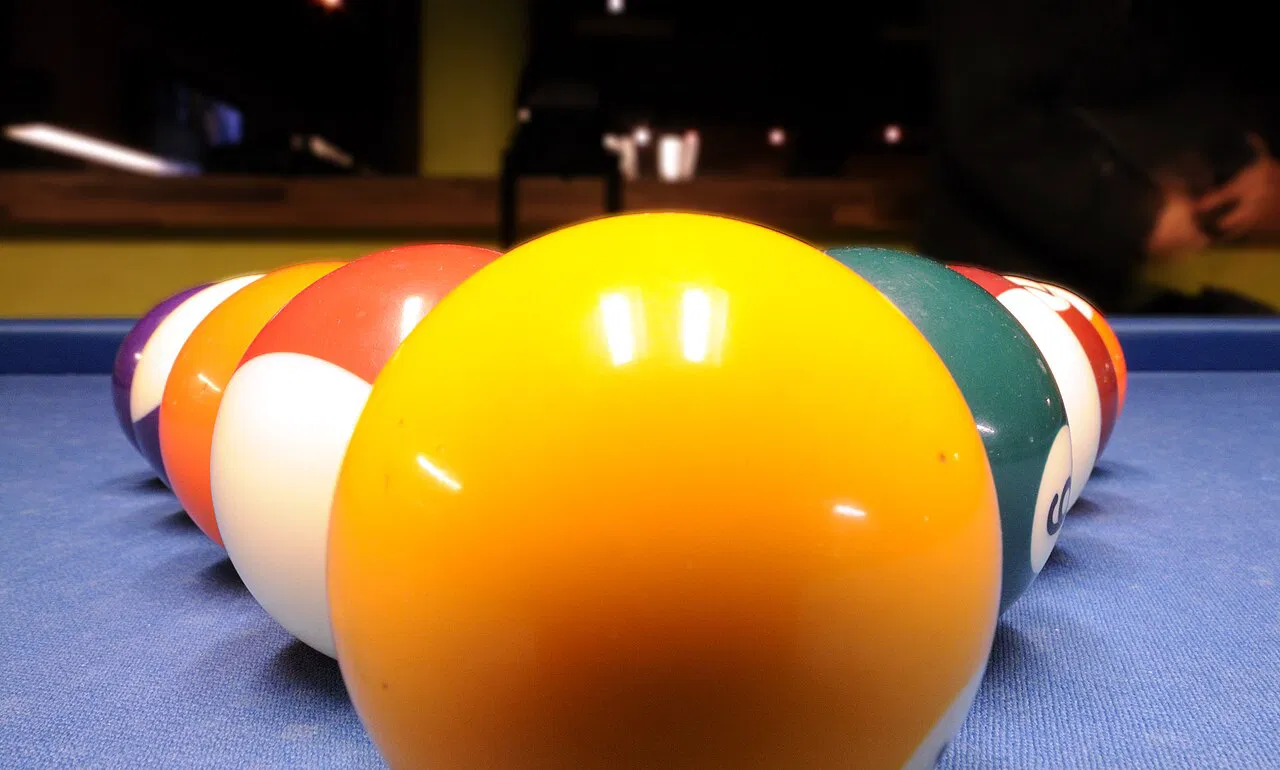
- Short rack: nine balls racked in a diamond, as for 9-ball — first to five valid banks wins the rack.
- Full rack: fifteen balls racked in a triangle, as for 8-ball — first to eight wins.
Matches run to an agreed number of racks.
How do the rack and the break work?
- Players lag, and the lag winner chooses who breaks the first rack.
- The cue ball starts in hand behind the head string.
- On the break, if no object ball is pocketed, at least four object balls must be driven to one or more rails. Fail that and the break is illegal: the opponent can accept the balls in position or require the breaker to break again.
- If any ball is pocketed on a legal break, the breaker's turn continues — the pocketed balls themselves score nothing unless they were banked, so they simply wait to be spotted.
What makes a bank shot valid?
This is the heart of the rulebook. Before shooting, the player must indicate the object ball, the cushion or cushions in the order they will be contacted, and the pocket. A two- or three-rail path must be named in sequence. Then all of the following must hold:
- The cue ball must contact the called ball first — before it touches any other ball or any rail.
- The called ball must not touch another object ball, or the cue ball a second time, on its way to the pocket.
- The object ball must not touch any uncalled rail. One exception: incidental contact with the two rail sections adjoining the target pocket, as the ball drops in, counts neither for nor against the shooter.
- No foul may occur during the shot.
If the cue ball contacts the called ball and a cushion — or another ball — at nearly the same instant and it cannot be determined which was struck first, the rules assume the called ball was struck first. The benefit of the doubt goes to the shooter.
How does scoring work?
- +1 point for each valid bank. Additional balls pocketed on the same shot do not count and are spotted after the shooter's turn.
- The rules recommend keeping score physically: pocketed balls sit in each player's storage location as markers.
- A foul costs one point — one of the fouler's scored balls is spotted back onto the table. If the fouler has no scored ball, a marker records that they owe a ball, and the next balls they score are spotted to pay off the debt before they can count.
When are balls spotted?
Anything pocketed other than by a valid bank, or driven off the table, gets spotted — normally at the end of the shooter's turn. The exception: if a shooter clears the entire table without reaching the required score, every ball waiting is spotted at once and the same player keeps shooting. If a ball that should have been spotted is only noticed later, it normally goes up once each player has had one full turn after the discovery — or immediately if both players agree.
What counts as a foul?
A standard foul costs one point, balls are spotted as necessary, and the turn passes. The cue ball stays where it lies — except after a scratch, when the incoming player takes it in hand behind the head string. The list:
- Cue ball scratched or driven off the table — incoming player gets ball in hand behind the head string
- No rail after contact
- No foot on the floor
- An object ball driven off the table
- Touched ball, double hit or frozen-ball violations, push shot
- Shooting while balls are still moving
- Bad cue ball placement
- Bad play from behind the head string — this one also gives the incoming player ball in hand behind the head string
- Playing out of turn, or slow play
Two penalties go further. Three consecutive fouls lose the rack outright. Unsportsmanlike conduct draws whatever penalty the referee judges the offense deserves.
What happens on a stalemate?
If the referee calls a stalemate, the object balls are re-racked as for the start of the game and the players lag for the next shot. Owed-ball markers carry over, and positive partial scores from the abandoned rack are added to the new rack — written down, because there will be no balls available to mark them.
Why does bank pool still matter?
Every cushion contact in ordinary pool is an admission that the direct path is blocked — bank pool makes that the whole game. It is the only discipline where position play means planning rails rather than just the cue ball, and where a clean two-rail bank under pressure is a scoring play, not a rescue. That purity is why bank pool has been a signature division at the Derby City Classic for years, and why the WPA's Rules of Play gives it a full chapter — §13, beside one-pocket — in the section for the classic disciplines.
Common questions
Does a straight-in shot count in bank pool?
No. Only a called bank — the object ball off at least one cushion into the called pocket — scores a point. Any other pocketed ball is spotted back on the table.
How many banks do you need to win?
Five valid banks in the short-rack game (nine balls in a diamond) or eight in the full-rack game (fifteen balls in a triangle).
Do you have to call every rail?
Yes. You must name the object ball, each cushion in the order it will be contacted, and the pocket. Contact with an uncalled rail invalidates the shot — except incidental contact on the two rail sections beside the target pocket as the ball drops.
What happens if you scratch?
Standard foul: you lose a point and your opponent gets ball in hand behind the head string, not anywhere on the table.
Do extra balls that drop on a bank shot count?
No. Only the called bank scores. Any additional pocketed balls are spotted after your turn ends.
What happens on a stalemate?
All object balls are re-racked, players lag for the next shot, owed-ball markers are preserved, and positive partial scores from the abandoned rack carry over to the new one.
This guide follows the WPA Rules of Play (§13 Bank Pool). Casual and house games often differ — always check the rules in force where you play. Cover photo: "A pair of hands setting a rack of colorful billiard balls on a blue pool table" by PattayaPatrol, CC BY-SA 4.0, via Wikimedia Commons.