Safety Play in Pool: The Defensive Shot, Explained
Not every good shot ends in a pocket. Why the defensive shot is the most underused weapon in pool — and the rules that decide whether your safety is legal.

Not every good shot ends in a pocket. The safety — deliberately leaving your opponent a worse table than you found — is a full legal shot with its own rules, and it wins more racks than any circus pot.
The most underused shot in amateur pool is the one nobody claps for. A safety is a shot played without the intention of pocketing a ball — the goal is position, distance and obstruction, not the score. Beginners treat it as giving up; league veterans treat it as the default whenever the table does not offer a high-percentage path forward. Here is when a safety is the right shot, what keeps it legal, and how the rulebooks you actually play under treat it.
What is a safety — and when is it the right shot?
A safety shot trades a low-odds attempt at a pocket for a high-odds improvement in table position. The situations where it is clearly correct:
- No makeable ball. If your best pot is a thin cut you make one time in five, the other four outcomes hand your opponent the table. A soft shot that leaves the cue ball a table-length away is worth more than a hero attempt.
- A miss sells out the rack. When your pot attempt, if missed, leaves an easy run-out, the miss costs you the game — not just the turn.
- Your group is tangled, theirs is open. In 8-ball, hiding behind your own problem balls or locking the cue ball where the opponent's key ball cannot be reached flips a losing layout.
- The score favors patience. In races, the player who is ahead often gains by slowing the rack down; the player behind is the one who must shoot.
The unspoken rule of thumb: a safety only pays if it is harder for the opponent to answer than your pot was to make. A lazy safety that leaves them a comfortable kick just wastes your turn — and a foul on the attempt is the worst outcome in pool, because ball in hand anywhere is exactly what you were trying to avoid.
What makes a safety legal?
This is the part league-night arguments get wrong: a safety is not a free pass to tap any ball. It must pass the same legal-shot test as every other shot.
- First contact must be correct. In 8-ball, the cue ball must first touch a ball of your own group — while the table is open, anything except the 8. In 9-ball and 10-ball, it must touch the lowest-numbered ball on the table, every shot, called safe or not.
- Something must be pocketed or reach a rail. If no ball is pocketed, then after first contact at least one ball — cue ball or any object ball — must be driven to a cushion. These are the WPA's "Wrong Ball First" and "No Rail after Contact" fouls (§3.2, §3.3), and they apply to safeties exactly as they do to pots.
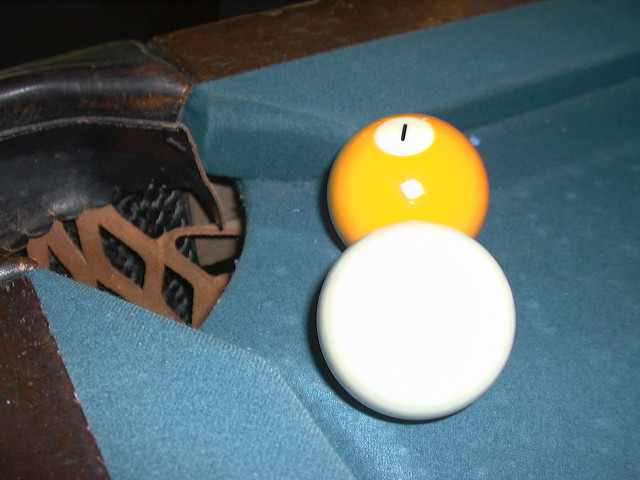
- The frozen-ball trap. A ball already touching a rail does not count as "driven to a rail" unless it leaves the cushion and returns (WPA §2.7). Soft safeties that nudge a frozen ball are the classic illegal safety: nothing reaches a rail, and the opponent walks up with ball in hand.
- Delicate touches carry foul risk. Trying to feather a cue ball that sits a chalk-width from the object ball risks the double hit and push shot — the two fouls built for exactly this situation. Scooping under the cue ball to hop a blocker is a foul, not a jump.
A legal safety ends your turn and leaves the table as you left it. An illegal one ends your turn and hands over ball in hand — anywhere on the table. The margin between them is one cushion.
Calling "safe": what changes by rulebook
The mechanics of declaring a defensive shot differ enough between rulebooks to matter on league night — this is also where the three rulebooks part ways.
- WPA rules (tournament 8-ball, 10-ball): call-shot disciplines let you call "safety" instead of a ball and pocket (§1.7, §2.16). In 8-ball (§4.6), play then passes to your opponent at the end of the shot — and anything you pocket stays down anyway. Declaring safe and accidentally potting a ball costs you the turn but not the ball.
- BCA Pool League (CSI/USAPL): the same convention, stated even more bluntly — declare the safety before the shot, verbally and unambiguously. If you do not declare and a ball drops, you must keep shooting. If you do declare and a ball drops, it stays down and your inning is over.
- APA 8-ball and 9-ball: there is no call-and-continue-out mechanism at all. A defensive shot is judged by intent and marked in the Defensive Shots block of the scoresheet — data that feeds The Equalizer handicap system. The counterintuitive part: if a ball legally drops on a shot you played defensively, your turn does not end — APA rules require you to keep shooting. And deliberately missing to manipulate your handicap is sandbagging, the one "unethical" defensive shot the league punishes.
- Rotation games under WPA (9-ball, 10-ball): nothing is called in these games anyway — not shots, not safeties. A safety is simply a legal shot that pockets nothing. There is one extra stake, though: safety exchanges invite fouls, and three consecutive fouls lose the rack in both games.
The classic safety patterns
Five defensive shapes cover nearly every safety you will ever need:
- Distance. The oldest safety in the book: leave the cue ball as far from the object ball as the table allows. Long shots miss more, and the reply usually cannot both pot and hold position.
- The thin hit. Feather the extreme edge of the object ball — it barely moves toward a rail while the cue ball dies where the blocker stands. Legal contact, minimal improvement for the opponent.
- The hook. Land the cue ball directly behind a ball the opponent may not hit first, so they cannot see their required ball at all — the pool version of a snooker. They must kick, jump or foul.
- The two-way shot. An honest attempt at the pot whose natural leave is defensive if it misses. It is the best of both worlds and, tellingly, the APA does not even count it as a defensive shot — intent to pocket was real.
- The push-out. The rules' built-in opening safety: after a legal break in 9-ball or 10-ball, the shooter may declare a push-out and push the cue ball anywhere — the opponent then decides whether to take the shot or hand it back. It exists precisely because dry breaks deserve a defensive answer.
Common questions
Is a safety a foul in pool?
No — a safety is a normal shot played to a defensive end. It is only a foul if it fails the standard legal-shot test: wrong first contact, or nothing pocketed and no ball driven to a rail afterward.
If I call "safety" and a ball goes in, what happens?
Under WPA rules and the BCA Pool League, the ball stays pocketed and your inning ends — that is the point of declaring. Under APA rules there is no such declaration: if a ball legally drops on a defensive shot, you must continue shooting, and the shot is marked as defensive on the scoresheet.
Do I have to call a safety out loud?
In call-shot games (WPA and BCAPL 8-ball), yes — declare it clearly to your opponent before the shot; gestures do not count. In APA play you declare nothing, but marking defensive shots honestly is a league obligation. In 9-ball and 10-ball there is nothing to call.
Can a safety force my opponent to foul?
Yes — that is often the plan. A well-hidden cue ball forces a kick shot or a jump, and a failed escape means ball in hand for you. In 9-ball and 10-ball, repeated failed escapes accumulate: three consecutive fouls lose the rack.
What is the difference between a safety and a push-out?
A push-out is a specific rule option available once, on the shot immediately after a legal break in 9-ball and 10-ball — the cue ball may be pushed anywhere, and the opponent chooses whether to shoot or return the shot. A safety is any defensive legal shot, available at any time.
Is a two-way shot a safety?
No — a two-way shot is a genuine attempt to pocket a ball that happens to leave a defensive position if it misses. Because the intent to pot was real, even the APA does not score it as a defensive shot.
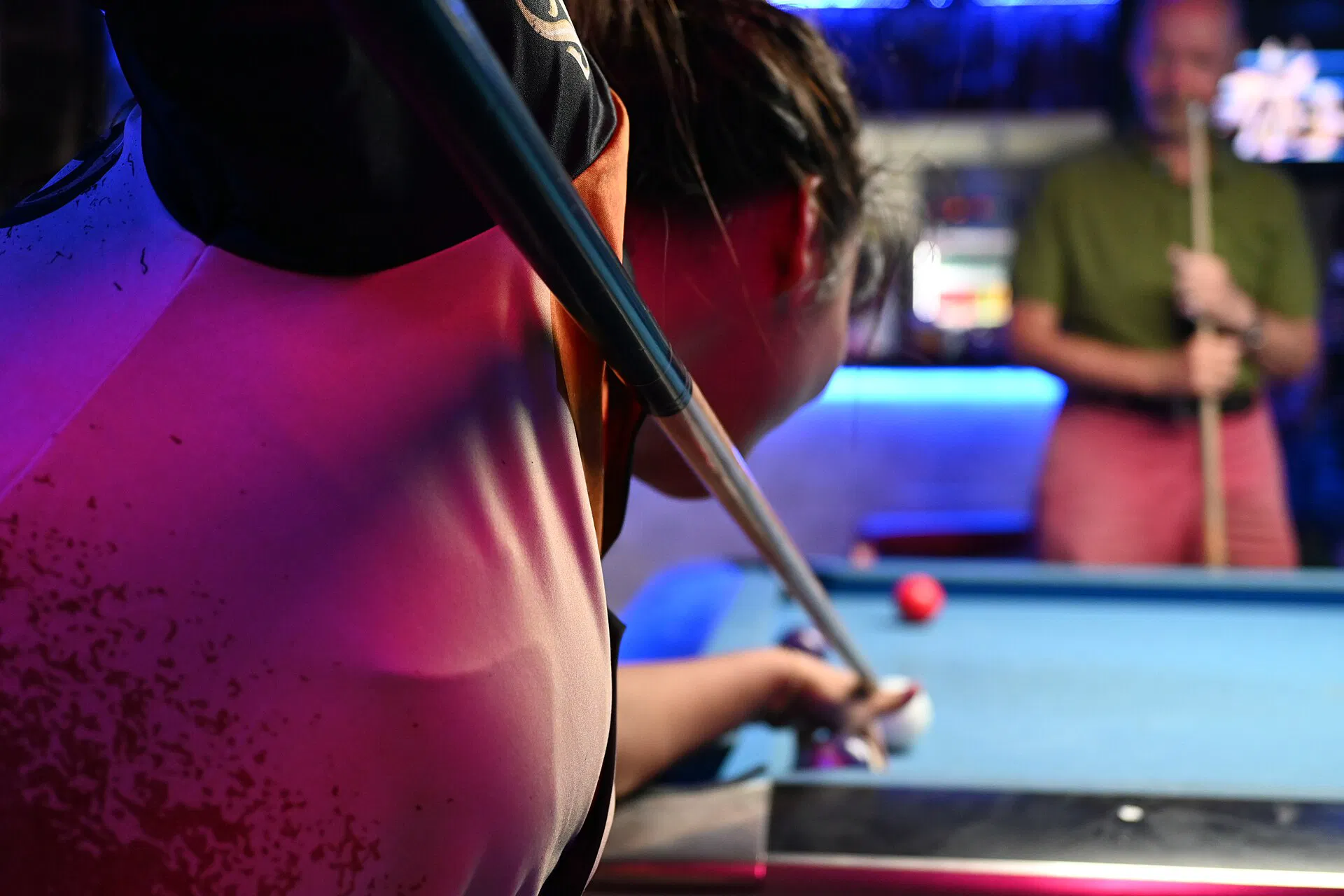
Rule citations follow the WPA Rules of Play, edition effective September 15, 2025 (§1.7 Standard Call Shot, §2.7 Driven to a Rail, §2.16 Safety Shot, §3.2–3.3, §4.6), the BCA Pool League rulebook's "Safety Shot" rule, and the APA's official Defensive Shots guidance at rules.poolplayers.com — league and house rules differ, so confirm which book your night uses. Cover photo: "A player lines up a shot over a blue pool table" by PattayaPatrol, CC BY-SA 4.0, via Wikimedia Commons.