Cowboy Pool Rules: The Complete Guide
Four balls, three scoring phases, and a finish you win by pocketing the cue ball on purpose — the official rules of pool’s strangest hybrid.
The only pool game you win by scratching on purpose — after ninety points of pockets and caroms, the last point is a cue ball deliberately sunk off the 1. The complete official rules of cowboy pool.
Cowboy pool — usually just "cowboy" — is pool's strangest hybrid: half pocket billiards, half carom game, played with just four balls and scored to exactly 101 points. It takes any number of players, needs no rack, and ends with a shot that would lose you the game anywhere else. This guide follows the Cowboy Pool section of the BCA's official rule book, plus the game's actual history.
What do you need to play?
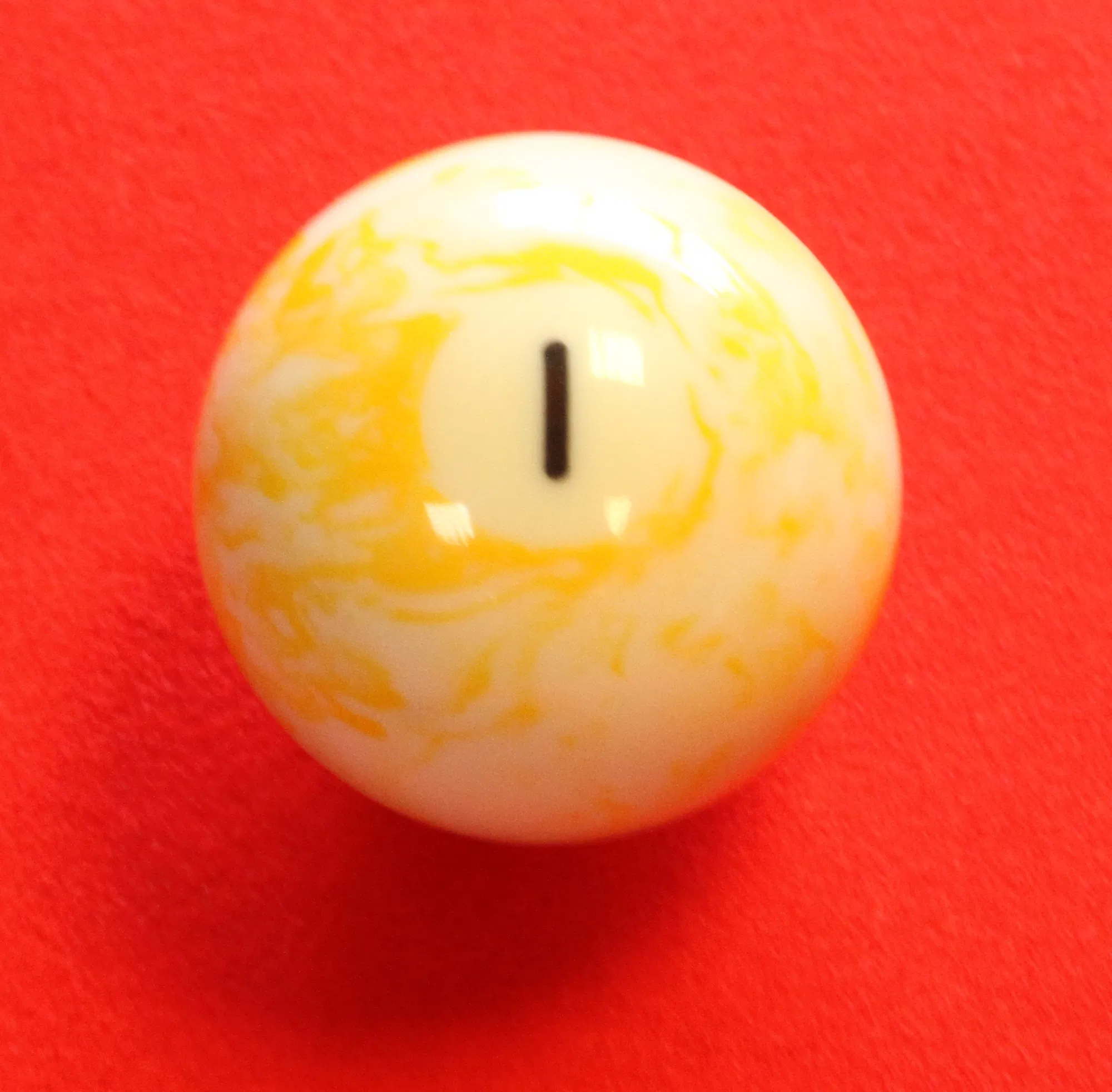
A standard pocket table and four balls: the cue ball and the object balls numbered 1, 3 and 5. No triangle — the balls sit on fixed spots: the 1 ball on the head spot, the 3 ball on the foot spot, the 5 ball on the center spot.
Cowboy seats any number of players — it works heads-up like 9-ball or as a ring game like cutthroat or kelly pool. Turn order is simply agreed before the game.
How does a game open?
There is no break shot. The starting player takes cue ball in hand behind the head string and must make the cue ball contact the 3 ball first. Fail that, and the incoming player chooses: force you to replay the opening shot, or take it themselves.
How do you score the first 90 points?
Three ways to score on a single legal stroke — and every one you accomplish counts:
- Pocket an object ball — score its face value: the 1 is worth 1, the 3 worth 3, the 5 worth 5.
- Carom the cue ball off any two object balls — 1 point.
- Carom the cue ball off all three object balls — 2 points.
A single stroke can therefore score in several ways at once: carom off all three balls and pocket all three and you take 11 points — the maximum on one shot.
Two rules shape every stroke:
- The cue ball must contact an object ball, and afterwards the cue ball or an object ball must reach a cushion. Miss both and it is a foul.
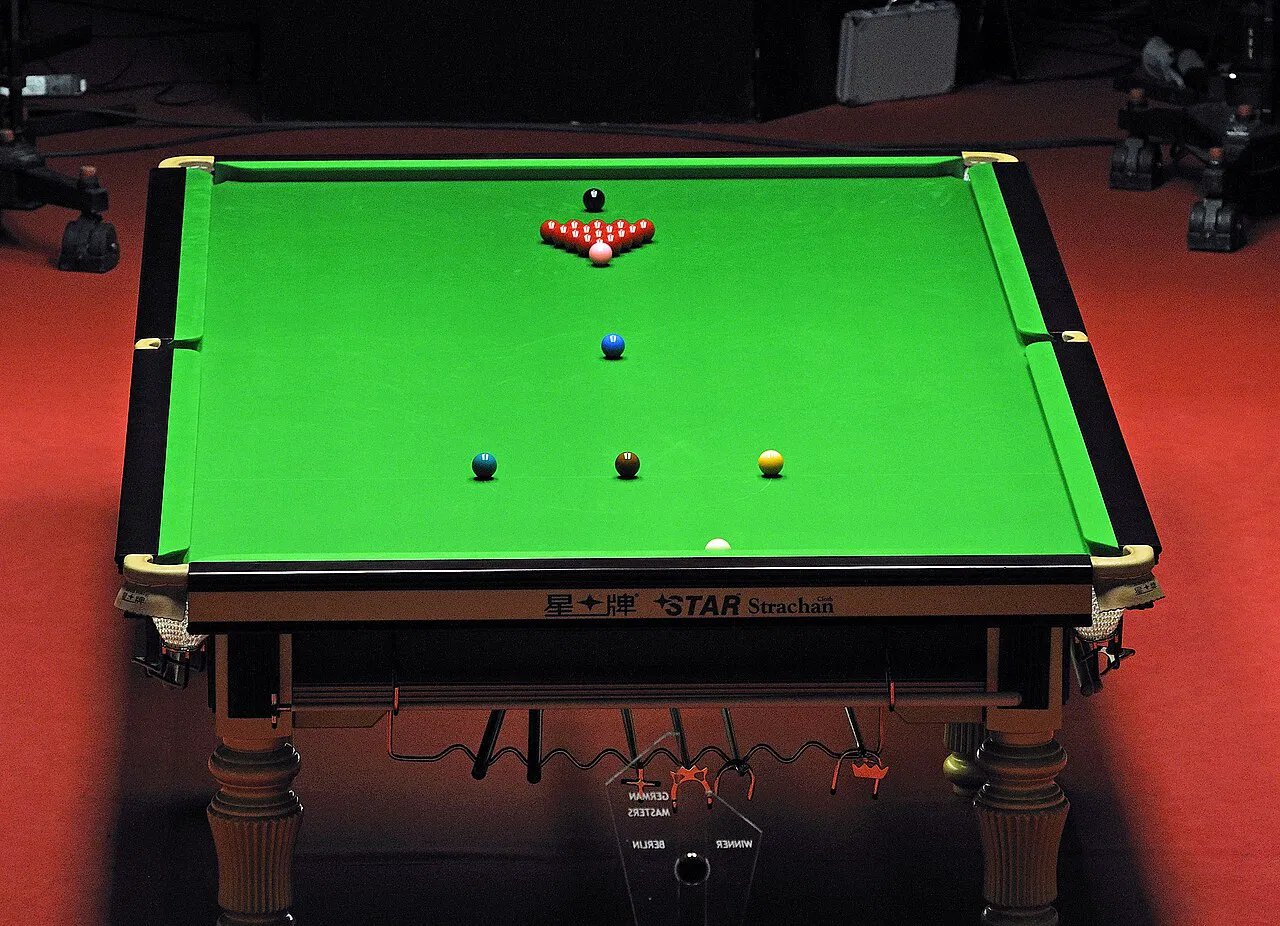
- Pocketed object balls come straight back — as in snooker, each is re-spotted on its opening position after the stroke. If a ball's spot is occupied, it stays off the table until the spot comes free.
Score legally and you keep shooting; your inning ends the first time a stroke produces no score — or a foul.
What changes for points 91 through 100?
Once you land on exactly 90, pockets stop paying. The next ten points must all come from caroms — 1 point for a two-ball carom, 2 for a three-ball carom — and pocketing an object ball on these strokes is a foul.
The rulebook even covers a corner case: if the 1 ball is held off the table because its spot is blocked while a player sits on exactly 100, all three object balls go back to their start positions and that player shoots with cue ball in hand behind the head string.
How do you score point 101?
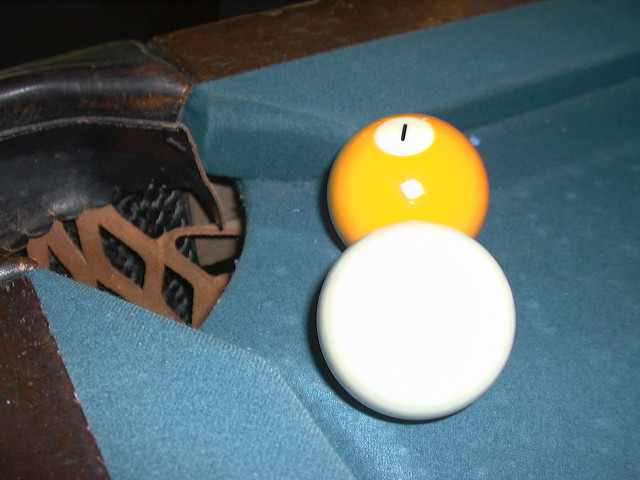
The final point is a losing hazard — an intentional scratch. With 100 on the board you must call a pocket, carom the cue ball off the 1 ball and into that pocket without the cue ball touching any other object ball. Carom off the 3 or the 5 into a pocket and it is a foul, not a win.
It is the only shot in pool where sinking the cue ball is not merely legal but required — the call has to be explicit, and the cue ball's path may touch nothing but the 1 on the way in.
What happens on a foul?
Cowboy keeps no penalty points — the punishment is harsher:
- Every point you scored during that inning is wiped out, and the inning ends. A foul on shot five erases the work of the four before it.
- After an ordinary foul, the incoming player accepts the cue ball in position.
- After a scratch or a cue ball jumped off the table, the incoming player has cue ball in hand behind the head string.
- Foul on three consecutive turns at the table and you lose the game.
- Object balls pocketed on illegal shots and object balls jumped off the table are simply spotted — the foul itself carries the cost.
Where did cowboy come from?
Cowboy descends from English billiards through an ancestor called thirty-eight, first reported in the Democrat and Chronicle in 1885 — a similar four-ball game played with two cue balls. Cowboy itself surfaces in a 1908 rule book, right as 8-ball was taking hold; how the name stuck, nobody knows.
It never went pro — one small sanctioned tournament in 1914 is its whole competitive record — yet the BCA has kept it in Billiards: The Official Rules and Records Book ever since, alongside the tournament disciplines. Its other home is stranger: for generations cowboy has been the traditional table game at the MacDowell artists' colony in New Hampshire, where it survives as a working pastime rather than a museum piece.
Common questions
How many people can play cowboy pool?
Any number. The official rules place no limit — it plays heads-up or as a ring game, with players simply rotating turns in an agreed order.
Why do you win cowboy pool by scratching?
The 101st point must be a losing hazard: the cue ball caroms off the 1 ball into a called pocket. Pocketing the cue ball on that exact shot is the legal winning stroke, not a foul.
What happens if I score more than 90 points?
It is a foul. The stroke that produces your 90th point must score exactly what you need — overshoot and you lose the inning's points and your turn.
Do pocketed balls stay down?
No. Like snooker, every object ball pocketed on a legal stroke is re-spotted on its opening position after the shot. If its spot is occupied, it waits off the table until the spot clears.
What is the most you can score on one shot?
Eleven points: pocket all three object balls (1 + 3 + 5 = 9) while caroming the cue ball off all three of them (2 more).
Is cowboy pool still an official game?
Yes — it still appears in the BCA's official rules and records book, though it has always been an amateur pastime. Its only recorded sanctioned tournament dates to 1914.
This guide follows the Cowboy Pool section of the BCA's Billiards: The Official Rules and Records Book — the General Rules of Pocket Billiards apply except where contradicted — plus the game's documented history. Cover photo: "Cue ball and 1 ball near a pocket" by Niteowlneils, CC BY-SA 3.0, via Wikimedia Commons.