Kelly Pool Rules: The Complete Guide
Draw a pill, keep it secret, and pocket your ball before anyone guesses it's yours — the BCA rules of pool's oldest ring game.
Nobody at the table knows your ball but you — draw a pill from the bottle, keep it hidden, and sink your secret number before anyone sinks it first. The complete rules of kelly pool, the original ring game.
Kelly pool — better known to most players as pea pool or pill pool — is the classic multiplayer pool game built around a secret: every player draws a numbered marker from a shake bottle and wins by pocketing the matching ball before anyone else pockets theirs. It takes anywhere from two to fifteen players (four to six is the sweet spot), needs no scorekeeping, and mixes rotation play with a little poker. This guide follows the official rules published by the Billiard Congress of America, plus the house variants you will actually meet.
What do you need to play?
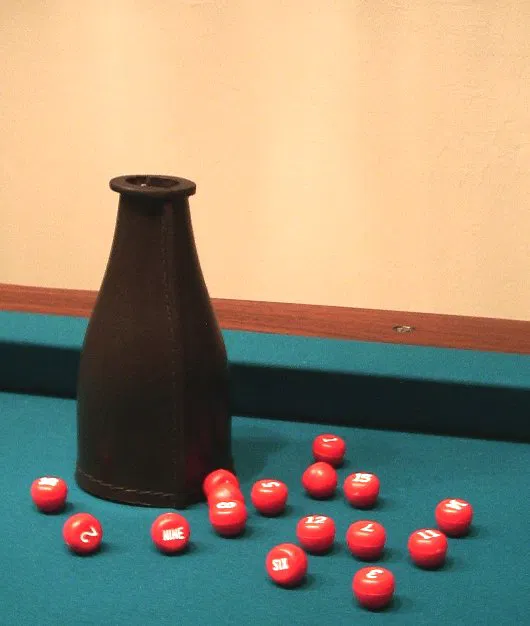
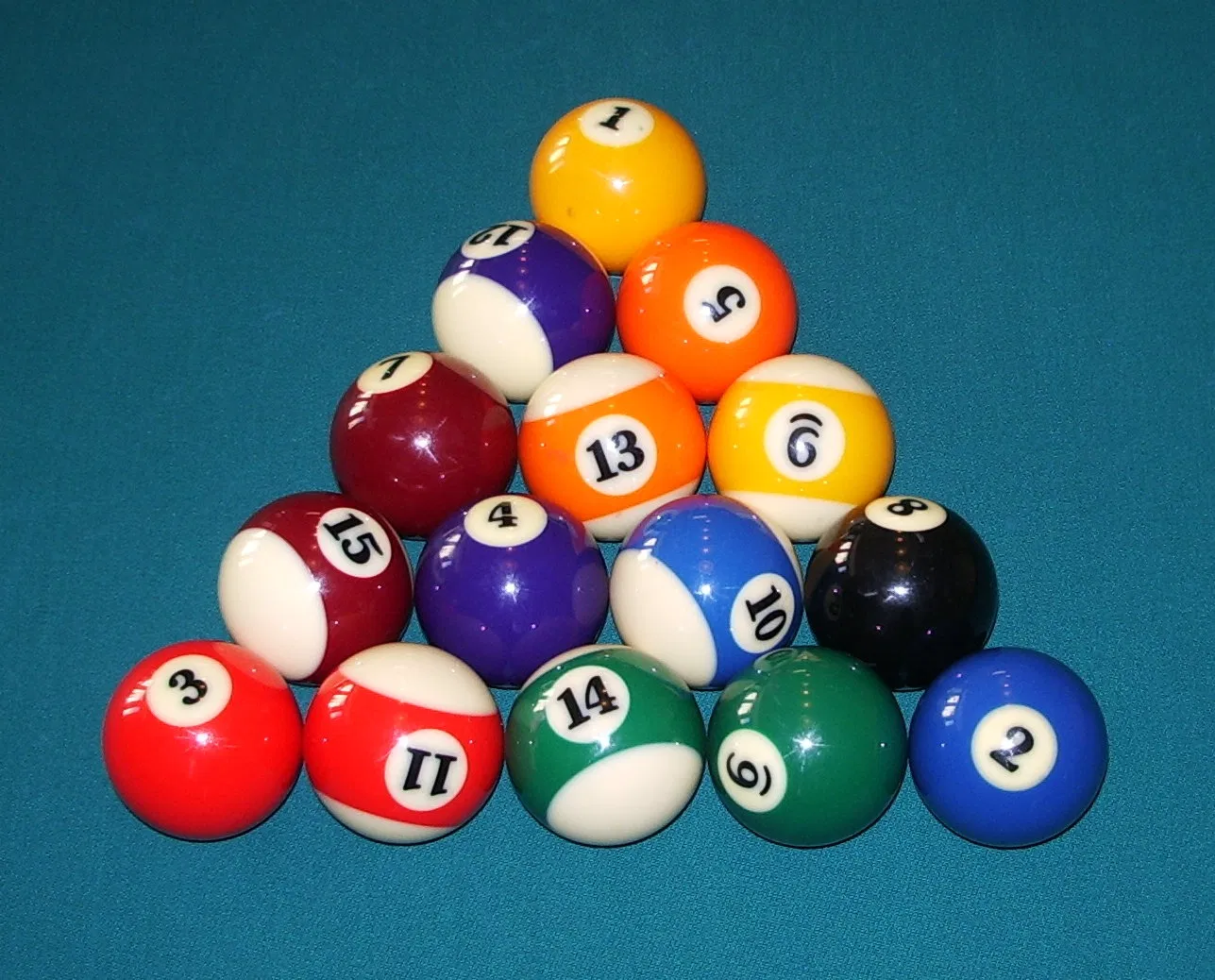
Beyond a standard table and a full set of fifteen object balls, kelly pool needs one extra piece of kit: a shake bottle — a narrow-necked leather or plastic bottle holding numbered markers called peas or pills (sometimes tally balls). A set of sixteen peas exists, but most games remove the 16 and play with the fifteen numbered balls only.
No bottle? The traditional fallback: drape a cloth over the balls, let each player pick one blind, record it, and rack as normal.
How does the draw work?
The peas come out of the bottle twice.
- First draw — shooting order. Every player draws a pea openly. Order of play follows the numbers in ascending order, and the lowest number takes the break. Some groups play that drawing the 16 earns the break instead.
- Second draw — your ball. The peas go back in the bottle, the balls are racked, and each player draws again — this time keeping the pill hidden. That number is your private number: the object ball you must pocket to win.
How do the rack and break work?
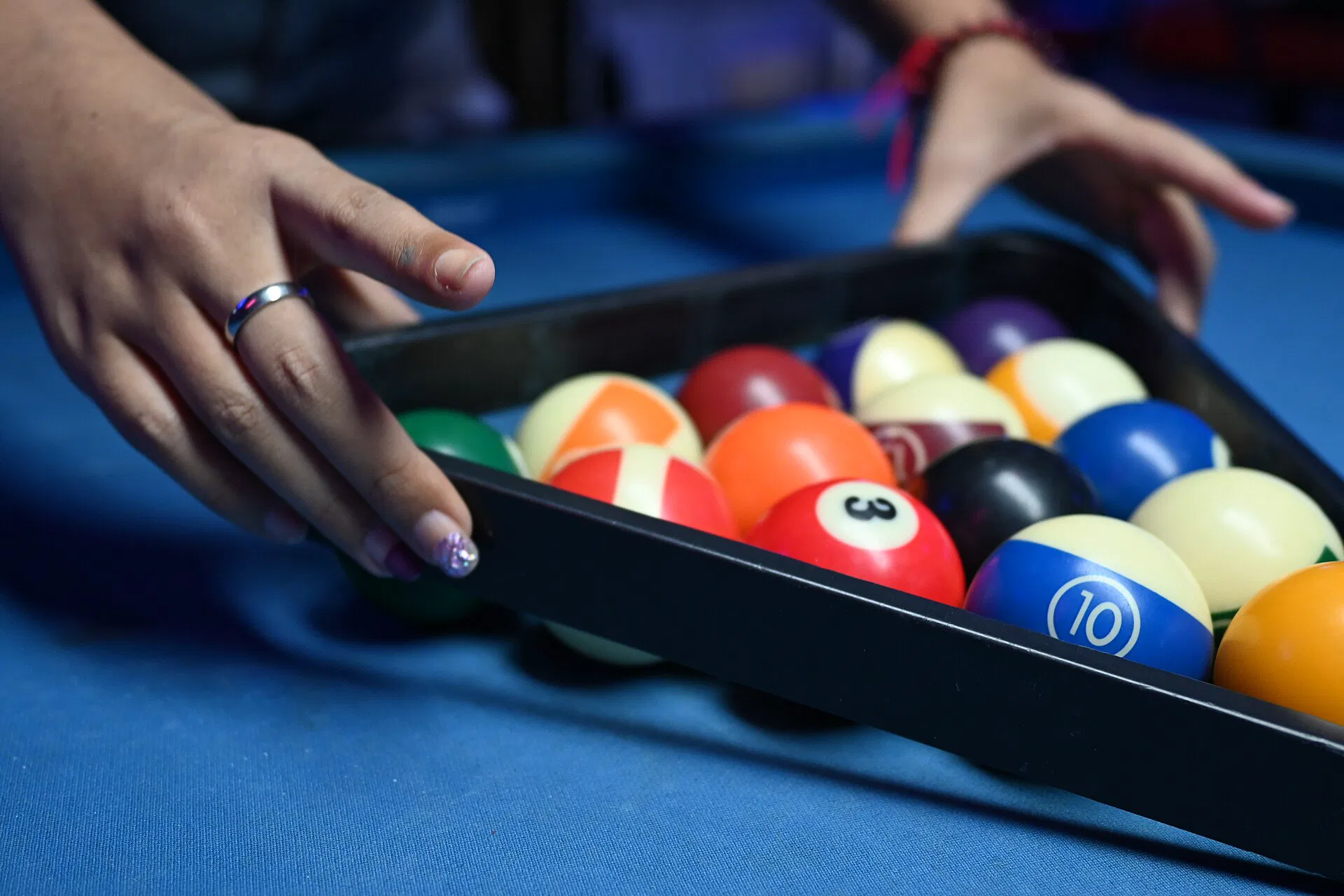
- Rack at the foot end: the 1 ball at the apex on the foot spot, the 2 and 3 on the two back corners, everything else at random.
- A legal break sends at least four object balls to the rails. Fail that, and the incoming player chooses: accept the table with cue ball in hand behind the head string, or re-rack and take the break themselves.
- Balls pocketed on a legal break stay down — and since nobody's number is revealed, a ball that disappears on the break may already have killed somebody.
What makes a shot legal?
Kelly pool is a rotation game — the same principle as 9-ball:
- On every shot after the break, the cue ball must contact the lowest-numbered ball on the table first.
- After contact, a ball must be pocketed or reach a cushion — otherwise it is a foul.
- Pocket any ball legally and you keep shooting — in fact you must keep shooting. There are no called shots and no safeties in kelly pool; you play until you fail to score or foul.
How do you win — and what is a "kill"?
The first player to legally pocket the ball matching their private number wins — immediately, no matter what else is on the table.
The twist is the kill: if you pocket someone else's private number, that player is dead. Dead players stay in the rotation and keep shooting — they just can't win anymore. In games played for an ante, a dead player must announce it before each turn; keeping quiet traditionally costs a penalty of half the ante. The announcement is selfish in a good way: dead players can quietly conspire to keep the live ones from winning.
If nobody legally pockets their own ball before the table is cleared, the game doubles up: peas are redrawn, players ante again, and a new game starts. Don't want a marathon? The usual house rule hands the win to whoever pockets the last ball — the 15.
What happens on a foul?
Kelly pool carries no point penalties — the punishment is positional:
- On any foul, the incoming player either accepts the table as it lies or makes the offending player shoot again (once per inning at most — you can't be forced to shoot indefinitely).
- Scratch or drive the cue ball off the table: whoever ends up shooting takes cue ball in hand behind the head string — and if the lowest object ball is also behind the line, they may have it spotted on the foot spot.
- An object ball jumped off the table is spotted, and the shot is a foul.
- Balls pocketed on an illegal shot are spotted on the foot spot (or as close as possible toward the foot rail) — no further penalty.
The 16-ball variant and the scoring version
Two wrinkles the rulebook makes room for:
- The 16th pea. Played with sixteen markers, drawing the 16 assigns you the cue ball — you win by contacting the lowest ball first and pocketing the cue ball on the same stroke. Most groups pull the 16 out of the bottle for exactly that reason.
- Point scoring. The BCA's second ruleset turns kelly pool into a points game: pocket your private number and every other player pays you two points; pocket someone else's and you take one point while they lose one — they're not out, though a player who fails to admit their ball went down before the next shot forfeits. This version is where the game's reputation for wagers came from.
Why does this game have a shady past?
Kelly pool is probably older than 8-ball itself — reportedly invented in Chicago in 1893 by a billiard-room keeper named Calistus "Kelly" Mulvaney, and for decades the default money game in American pool rooms. That association cut both ways: newspapers treated it as a gambling menace, several jurisdictions banned it outright, and playing it remained a fineable offence in Montana until 1964. The game's other legacy may be a phrase you already use — many etymologists trace "behind the eight-ball" to kelly pool and its predecessor kelly rotation, since the idiom predates eight-ball's popularity.
Common questions
How many people can play kelly pool?
Anywhere from two to fifteen, but four to six is the sweet spot. With more than six or seven, each player waits a long time between turns.
Do you have to call your shots?
No — shots are never called in kelly pool. Pocket any ball legally and you keep shooting, which is also why nobody knows your ball is gone until it's too late.
What happens if I pocket someone else's ball?
They go "dead" — they stay in the rotation and keep shooting, but they can no longer win. You simply continue your inning as normal.
What happens on a scratch?
Whoever shoots next gets cue ball in hand behind the head string. On a non-scratch foul, the incoming player chooses between taking the table as it lies or making you shoot again.
What if nobody sinks their own ball?
The game "doubles up" — everyone redraws peas and antes again for a fresh game. If your group doesn't want to extend, the standard house rule is that pocketing the last ball, the 15, wins.
Is kelly pool the same as bottle pool?
No — the names just overlap. Bottle pool uses a similar leather bottle as a carom target standing on the table; kelly pool's bottle is only used to shake and draw the numbered peas.
This guide follows the official kelly pool rules published in the BCA's rule book, Billiards: The Official Rules and Records Book — the General Rules of Pocket Billiards apply except where contradicted — plus common pea-pool house variants. Cover photo: "A leather shake bottle and plastic peas" by Stanton McCandlish, CC BY-SA 3.0, via Wikimedia Commons.