Pool Rules Quick Reference
Seven games on one page — how you win, how you rack, the rules that matter and the fouls that cost you.

Seven games, one page. Below is the short version of each game's official rules — how you win, how the balls go in the rack, which shots are legal and which fouls cost you — with a link to the full guide for the game you're playing tonight. The pocket games follow the WPA Rules of Play as updated October 21, 2026; three-cushion, played on a table with no pockets, follows UMB carom rules instead.
| Game | You win by | After a foul |
|---|---|---|
| 8-ball | Clear your group, then the 8 | Ball in hand anywhere |
| 9-ball | Pocket the 9 legally | Ball in hand anywhere |
| 10-ball | Call and pocket the 10 last | Ball in hand anywhere |
| Bank pool | First to 5 (or 8) valid banks | Lose a point; scratch = ball in hand behind the line |
| One-pocket | First to 8 in your pocket | Lose a point; scratch = ball in hand behind the line |
| 14.1 | Reach the target score | −1 point; scratch = ball in hand behind the line |
| Three-cushion | Reach the point target | Inning ends — no ball in hand |
How do you win at 8-ball?
- Win: Clear your group — solids (1–7) or stripes (9–15) — then legally pocket the 8-ball in its called pocket.
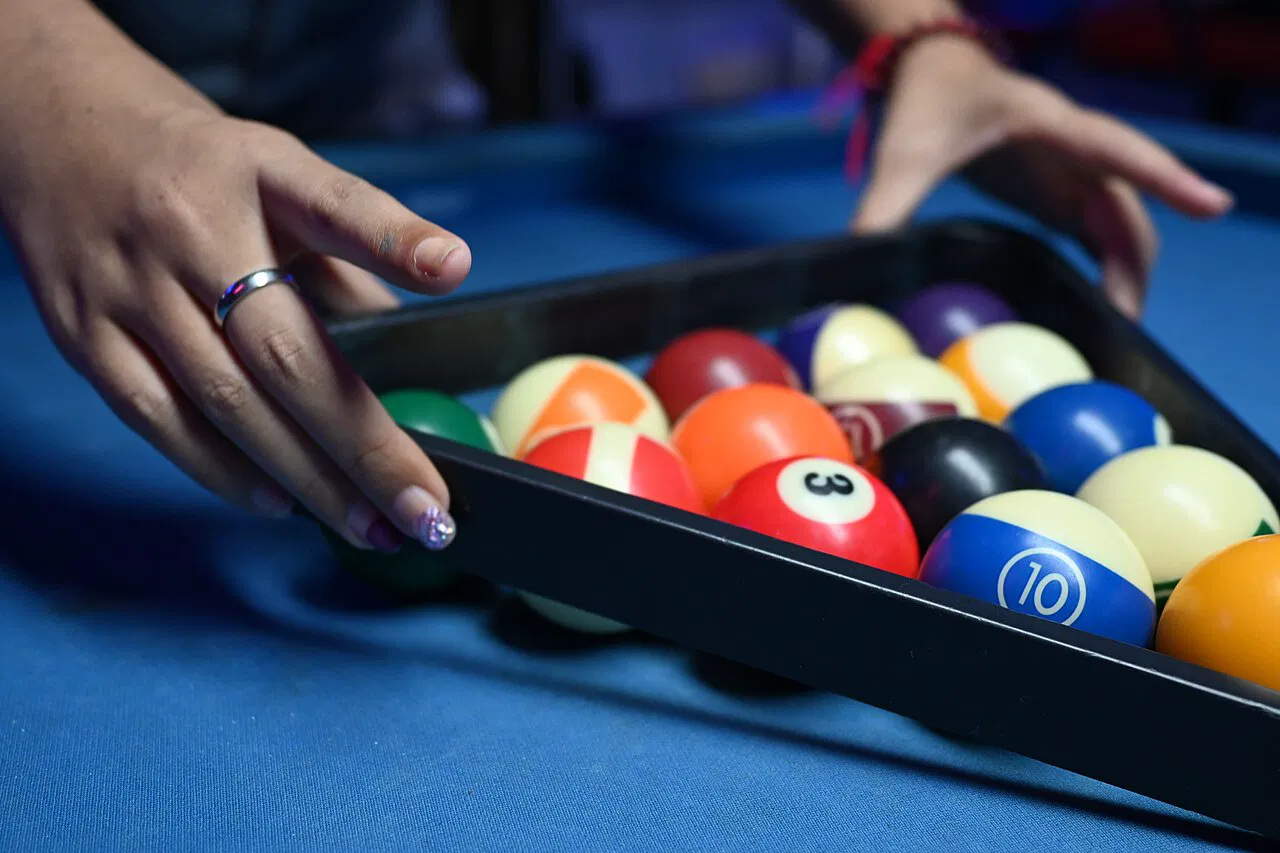
- Rack: Fifteen balls in a triangle, apex ball on the foot spot, the 8 in the center, one ball from each group on the back corners.
- Key rules: Every shot after the break is call-shot. The break decides nothing — the table stays open until someone pockets a called ball, and hitting the 8 first on an open table is a foul. Every foul gives the incoming player ball in hand anywhere; there is no three-foul rule.
- Common fouls and instant losses: You lose the rack on the spot for pocketing the 8 early, in an uncalled pocket, on a foul, or off the table. The 8 on the break is neither a win nor a loss — spot it or re-break.
Full guide: 8-Ball Rules: The Complete Guide
How do you win at 9-ball?
- Win: Legally pocket the 9-ball — on any shot, a combination, or the break.
- Rack: Nine balls in a diamond: the 1 at the apex, the 9 in the center on the foot spot, the rest without a pattern.
- Key rules: Rotation — the cue ball must hit the lowest-numbered ball first, but nothing has to be called. After a legal break you may declare one push-out. Three consecutive fouls lose the rack, and a warning at two fouls is required.
- Common fouls: Scratch, wrong ball first, no rail after contact — all give ball in hand anywhere. A dry break must also send four balls to a rail and three past the head string, or it's an illegal break.
Full guide: 9-Ball Rules: The Complete Guide
How do you win at 10-ball?
- Win: Call and pocket the 10-ball when it is the last object ball on the table — there are no early-10 wins and no golden break.
- Rack: Ten balls in a triangle: the 1 at the apex on the foot spot, the 10 in the center.
- Key rules: Call-shot like 8-ball, rotation like 9-ball. A 10 pocketed early — even on the break — is spotted. Pocketing your called ball in the wrong pocket isn't a foul, but your opponent chooses who shoots next. The push-out and three-foul rule both apply.
- Common fouls: Same list as 9-ball — scratch, wrong ball first, no rail — all ball in hand anywhere.
Full guide: 10-Ball Rules: The Complete Guide
How do you win at bank pool?
- Win: First to five valid banks in the short game (nine balls) or eight in the full game (fifteen).
- Rack: A diamond for nine balls, a triangle for fifteen.
- Key rules: Nothing counts unless the object ball banks off at least one cushion into the called pocket — and you must name the ball, the cushions in order, and the pocket. Extra balls that drop are spotted. A foul costs one point: spot a scored ball or owe one.
- Common fouls: A scratch gives the opponent ball in hand behind the head string — not anywhere. Three consecutive fouls lose the rack.
Full guide: Bank Pool Rules: The Complete Guide
How do you win at one-pocket?
- Win: First to eight balls in your assigned corner pocket at the foot of the table.
- Rack: Fifteen balls in a triangle, apex on the foot spot, no pattern; the breaker picks which foot pocket is theirs.
- Key rules: Only the two foot pockets count — anything into a side or head pocket is spotted. Balls that drop in your opponent's pocket score for them, even on your shot. There are no special requirements on the break. Fouls cost one point — spot a scored ball or owe one.
- Common fouls: A scratch gives the opponent ball in hand behind the head string; three consecutive fouls lose the rack.
Full guide: One-Pocket Rules: The Complete Guide
How do you win at 14.1 straight pool?
- Win: First to the agreed score — traditionally 100 — at one point per called ball.
- Rack: Fifteen balls, apex on the foot spot. When fourteen are down they re-rack with the apex position open and the fifteenth stays where it lies — the famous break ball.
- Key rules: Call shot, every ball worth a point. You may call "safety" and end your own inning. Standard fouls cost a point and scores can go negative; a bad opening break costs two; three consecutive fouls add a fifteen-point penalty plus a re-rack.
- Common fouls: There is no ball in hand anywhere in this game — the cue ball stays where it lies, except after a scratch, when the incoming player gets ball in hand behind the head string.
Full guide: 14.1 Straight Pool Rules: The Complete Guide
How do you score in three-cushion billiards?
- Win: First to the set total — 40 or 50 points at major events — with the non-breaking player getting one equalizing inning.
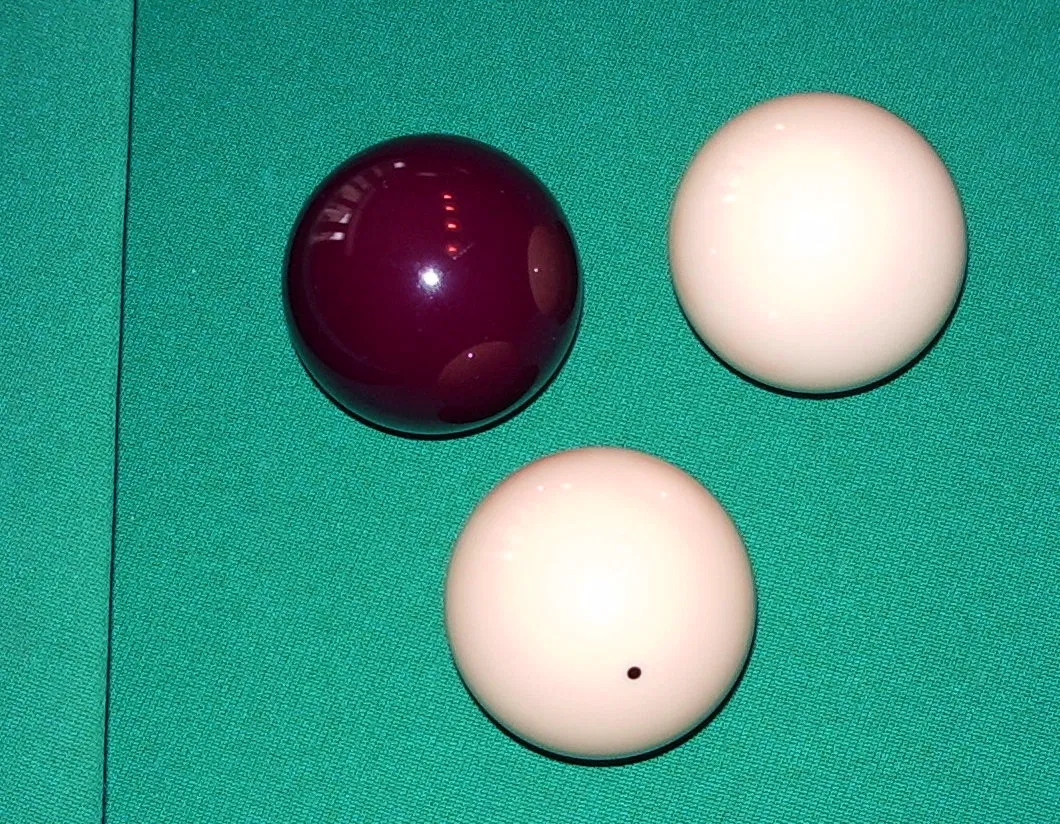
- Setup: No rack at all — a pocketless table and just three balls: your cue ball, your opponent's cue ball and a red object ball.
- Key rules: A point (a carom) needs the cue ball to touch both object balls in one shot, contacting cushions at least three times before reaching the second ball — in any order, on any cushions. Fouls simply end the inning; balls that leave the table are re-spotted.
- Common fouls: Not hitting the red first on the break, shooting the wrong cue ball, touching a ball, or playing directly into a cushion your ball is frozen to. Under USBA rules, an intentional safety is itself a foul.
Full guide: Three-Cushion Billiards Rules: The Complete Guide
Common questions
Which of these games is easiest to learn?
9-ball — hit the lowest ball first and pocket the 9 to win. 8-ball is the most commonly played but carries the most rule variations between rooms.
Is ball in hand anywhere the standard?
In 8-ball, 9-ball and 10-ball, yes — every foul gives ball in hand anywhere on the table. Bank pool, one-pocket and 14.1 restrict it to behind the head string after a scratch, and three-cushion has no ball in hand at all.
Which games have a three-foul rule?
9-ball, 10-ball, bank pool and one-pocket — three consecutive fouls lose the rack. In 14.1 the third foul costs an extra fifteen points plus a re-rack instead. There is no three-foul rule in 8-ball.
Are league or bar rules the same as these?
Often not — the APA scores by its own system, and house rules commonly change the 8-ball break, ball-in-hand and the money ball. Always check the rules in force where you play.
Where are the official rules published?
The WPA publishes the Rules of Play covering every pocket game above; three-cushion is governed internationally by the UMB, with USBA rules used in the United States.
Pocket games follow the WPA Rules of Play, current edition; three-cushion follows the UMB Carom Billiards Rules and the USBA Three-Cushion Rules of Play. Cover photo by PattayaPatrol, CC BY-SA 4.0, via Wikimedia Commons.