Call Shots, Slop and Racking Rules: The Rules Everyone Argues About
When 'did you call that?' starts the argument: which games actually require called shots, when a fluke counts, and who gets to rack.
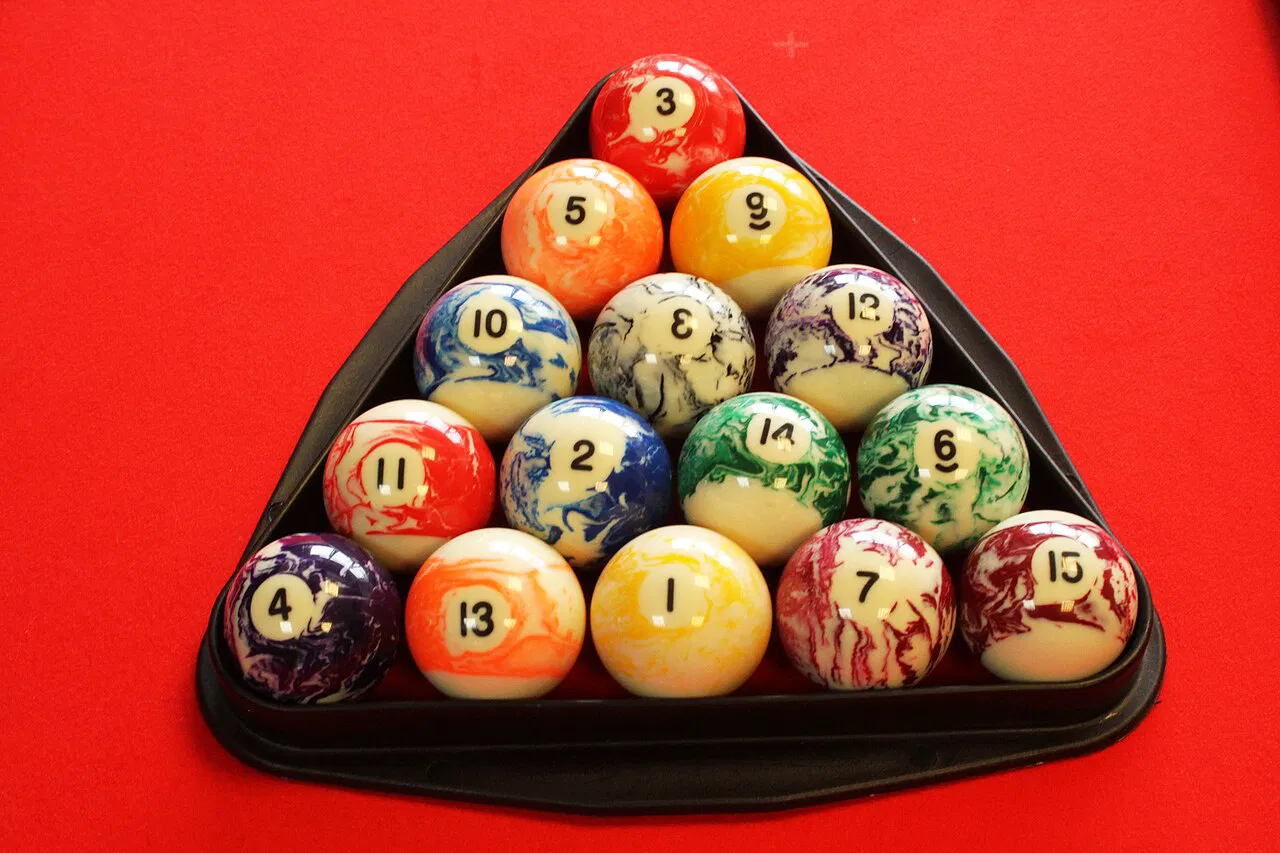
Every pool hall runs on the same three arguments. Someone says "you didn't call that." Someone else says "slop counts." And somebody stares at the triangle and announces the rack is wrong. The awkward truth is that all three arguments have the same answer: it depends which rulebook your table is using. Here is what the official rules actually say — and where league nights and house rules legitimately differ.
Which rulebook actually applies to your table?
Three different documents govern almost every pool argument in North America:
- WPA Rules of Play — the World Pool Association's official rulebook, the reference for professional events and the default when no other rules are posted. The WPA issued a new edition effective October 21, 2026 — mostly standardized terminology plus clearer Head String wording, not a rewrite of the games (what actually changed).
- League rules — the BCA Pool League and USAPL play under CSI's rulebook; the APA publishes its own Team Manual. These are their own documents with real differences, not summaries of the WPA book.
- House rules — whatever the bar says. Common, legitimate, and frequently the only "rules" anyone at the table has ever heard.
Nine times out of ten, a table argument is two people quoting two different books. The first question to settle is never "what's the rule?" — it's "whose rules are we playing?"
What does a "call shot" actually require?
Under both the WPA rules and the BCAPL rules, a called shot means one thing: name the ball and the pocket before you shoot. That is the entire obligation.
- Obvious shots need nothing said at all.
- You never describe the details — kisses, caroms, combinations, number of cushions are all irrelevant. If the called ball reaches the called pocket by any legal route, it counts. That is a made called shot, not luck.
- You may only call one ball per shot. Under BCAPL rules, calling two balls or adding "just in case" ends your inning and anything pocketed is illegally pocketed.
- If your opponent can't tell what you're shooting, it's their job to ask — before you're down on the shot. When in doubt, the referee decides what was obvious.
- Banks, kicks and combinations are defined as not obvious: always call them.
Some games also let you declare "safety" instead of a ball and pocket — but not all of them, and that's where the next section matters.
Which games make you call — and which let luck count?
| Game | Rulebook | Call shot? | Does a fluke count? |
|---|---|---|---|
| 8-ball | WPA | Yes — every shot but the break | Ball stays down, inning ends |
| 8-ball | BCAPL | Yes — same standard | Ball stays down, inning ends |
| 8-ball | APA | No | Yes — any legal make counts |
| 9-ball | WPA | No | Yes — including the 9 itself |
| 10-ball | WPA | Yes, strictest of all | Wrongfully pocketed: opponent chooses who shoots |
| 14.1 straight pool | WPA | Yes — every ball | Uncalled balls are spotted |
| Bank pool | WPA | Yes — every shot must be a called bank | A clean make that wasn't banked doesn't score |
| One-pocket | WPA | Not in the usual sense | Your pocket is the call — read below |
The two lines that surprise people are the APA and 9-ball rows. APA 8-ball is explicitly not call pocket: as long as your stroke was legal and one of your balls drops — any ball, any pocket, any route — you keep shooting. Only the 8-ball has to be designated, and you mark the pocket with a physical object (never chalk). 9-ball is the same philosophy: nothing is called, so a fluked ball counts like a planned one — and a 9 that falls on any legal shot wins the rack.
One-pocket is its own animal. You never call a ball because your pocket was committed before the break: anything that drops in your pocket scores for you — including pure accidents — and anything you knock into your opponent's pocket scores for them.
When does slop count — and when does it cost you?
Three rules settle almost every "that was luck" dispute:
- The stroke has to be legal first. Hit your own group (or the lowest ball) first, then pocket a ball or reach a rail. A fluke can't save a foul — scratch while fluking one in and it's still a scratch.
- In non-call games, luck is part of the game. A caromed make in 9-ball or an APA 8-ball that rattles into the wrong pocket all count.
- In call-shot games, an uncalled make ends your turn — but it is not a foul. Under WPA 10-ball the opponent even gets to choose who shoots next, and under 14.1 anything you didn't call gets spotted back. No ball-in-hand, no penalty — you just sit down.
The nuance people miss: extra balls pocketed on a good called shot stay down and you keep shooting. Dropping a second ball while making your called shot is not slop — it's a bonus. And in WPA 8-ball you may call "safety" and anything that drops stays down while the turn passes; 10-ball removed that option entirely, which is why it's the pros' anti-luck format.
Who racks — and what makes a rack legal?
Tight beats pattern. Every rulebook requires the balls frozen together; a visible gap is grounds to ask for a re-rack before the break. After that, the requirements are thinner than most players think:
- 8-ball (WPA/BCAPL): apex ball on the foot spot, 8 in the center, one ball from each group on the two back corners, the rest placed without intentional pattern. The alternating stripes-and-solids pattern some bars insist on is a house rule — the official books don't require it.
- 8-ball (APA): just the 8 in the center, everything else random — and in APA you rack your own.
- 9-ball: 1 at the apex, 9 in the middle, the rest random. The current WPA book seats the rack so the 9 sits on the foot spot; some events place the 1 on the spot instead — check the event sheet.
- 10-ball: 1 at the apex on the foot spot, 10 in the center, rest random. BCAPL adds the 2 and 3 on the back corners.
Pattern racking is the real fight in 9-ball. Learning to park the wing ball turned racking into a skill exploit, which is why tournaments moved to template racks, referee-checked racks, and break regulations like the three-point rule. Those break rules are event regulations, not core WPA rules — the base requirement on a dry break in the WPA pocket games is simply four object balls to a rail.
Straight pool even has a special-racking corner: when the fifteenth object ball or the cue ball interferes with the next 14-ball re-rack, WPA Rule 7.8 has a placement table using "above" and "below" the head string — the very wording the October 2026 edition went in and tidied up.
Which arguments does this actually settle?
- "You didn't call it!" — valid under WPA and BCAPL 8-ball (except the break and obvious shots), invalid on an APA table.
- "That was a fluke, it doesn't count." — it counts in 9-ball and APA 8-ball; in call-shot games it stays down but your turn is over.
- "8 on the break wins." — true in the APA; under WPA and BCAPL the breaker chooses to spot the 8 or re-rack.
- "You have to call every rail and kiss." — never, in any rulebook.
- "The rack has to alternate." — not under WPA rules; center-8 plus split corners is all that's required.
When the next argument starts, the winning move is rarely knowing the rule — it's knowing which book the table is playing from. Our pool rules quick reference keeps the short version of all seven games on one page.
Is 8-ball a call shot game?
Under WPA rules and the BCAPL, yes — every shot except the break must designate ball and pocket, though obvious shots don't need to be verbalized. Under APA rules, no: the APA 8-ball format is explicitly not call pocket, and only the 8-ball must be marked.
Does a lucky shot count in 9-ball?
Yes. Nothing in 9-ball is called, so any legally pocketed ball stays down — and if the 9-ball falls on any legal shot, including a fluke or a legal break, you win the rack.
Do I have to call cushions, kisses or combinations?
No rulebook requires it. You designate only the ball and the pocket; the route is irrelevant as long as the stroke is legal. Calling extra detail doesn't protect you, and under BCAPL rules calling more than one ball actually ends your inning.
Can I call "safe" and still pocket a ball?
In WPA 8-ball, yes: declare "safety" and any balls pocketed stay down while your inning ends. In 10-ball there is no safety call at all — a pocketed ball on a missed called shot gives your opponent the choice of who shoots.
Is making the 8-ball on the break a win?
Depends on the book. APA: yes, it's a win if you don't scratch. WPA and BCAPL: no — the breaker chooses to have the 8 spotted and continue, or re-rack and break again.